
For those that do not know, I come from a strength & conditioning background. I’ve worked with athletes, read books on the topic, spoken to a ton of coaches and also done an internship abroad. So when it comes to helping an athlete perform better in his/her sport, I’m pretty sure I know a thing or two.
However, I’ve always been interested in the nutrition aspect of athletic performance. While I’ve read a book or two on nutrition, indulged in the Alan Aragon Research Review( if you’re a fitness professional and you’re not subscribed to this, you’re missing out) and wrote articles on intermittent fasting and basic nutrition, I’ve never really did anything more than that.
That changed in the past 6 months when I enrolled in the ISSN diploma of Applied Sports and Exercise Nutrition. This post graduate course is amazing because I’m not only learning about the biochemistry and metabolism on how food interacts with our physiology; I’m taking away practical points after every lecture.
It’s probably the best decision I’ve made in terms of my education and it has my stamp of approval! The only thing that beats it is learning how to become Batman, which I’m still working hard on.
I figured I’ll start writing more on nutrition because there’s nothing better than getting smarter while helping others gain some knowledge bombs while I’m at it.
This is going to be the first post on nutrition after my hiatus. It will cover some simple nutrition tips that I’ve used to help both myself and clients achieved their goals.
Best part is that it’s highly practical and can be implemented almost immediately!
1. Stop trying to do everything right.
A common mistake people make is over complicating things. While learning the rocket science behind nutrition can be complex, but to the lay person adherence would be the most difficult part.
“I must consume 25.67g of Whey after my workout!”
“I need High GI carbs to spike insulin!”
“If I don’t consume my Bcaa’s my muscles will fall off!”
Exaggeration aside, these are just some of the common statements I hear people make. While some people might benefit from it, it wouldn’t have any significant effect for most people.
Beginners who try to get everything “right” will most likely be overwhelmed by all the minutia and more often than not, fail at doing it.
The more things you try to correct, the lower adherence will be.
It’s no surprise when people say that eating well is too difficult when they are trying to fix the unnecessary instead of focusing on the things that really matters.
It’s like trying to paint your concrete floor grey, which is not only a waste of resources but also time.
Focusing on the unnecessary instead of what matters is like trying to paint your concrete floor grey. <—- Tweet this!!!
Just stop doing it
2. Ask yourself: “Why am I eating this?”
He who has a why to live can bear any how- Friedrich Nietzsche
This tip is particularly important not because I made a nutrition tip sound philosophical (brownie points for doing that though) but it teaches a simple concept of being aware of what you’re eating.
In a busy world, most of us barely take the time to sit down and actually take a few moments and savour our food. We sit down with our meal in front of us, fork in one hand and smart phone in the other.
As we put that piece of fried chicken in our mouth we are tweeting how delicious it is. 5 minutes later, the plate is empty and we leave.
Asking yourself why you’re eating a certain food will give you a rough idea of what you’re eating. It will also slow you down instead of making you gobble down food faster than a starving child.
This creates mindfulness.
Not being aware of what you’re eating can be a problem because it can actually reduce level of satiety. That means you’ll actually feel less full after a meal.
Being mindful of what you eat on the other hand can increase level of satiety and will enhance the flavours of food when you take time to savour it.
So the next time you’re eating, ask yourself why you’re eating it. If you’re clueless on how to do it, here are some examples:
Brussels sprouts: It’s packed with fibre and nutrients
Steak: It’s a good source of protein and it’s tasty
Ice Cream: Life is not complete without it.
Those are just a few examples you can follow. So the next time you put something in your mouth, be mindful on what you’re eating instead of telling your 5000 Facebook friends how delicious your dinner is.
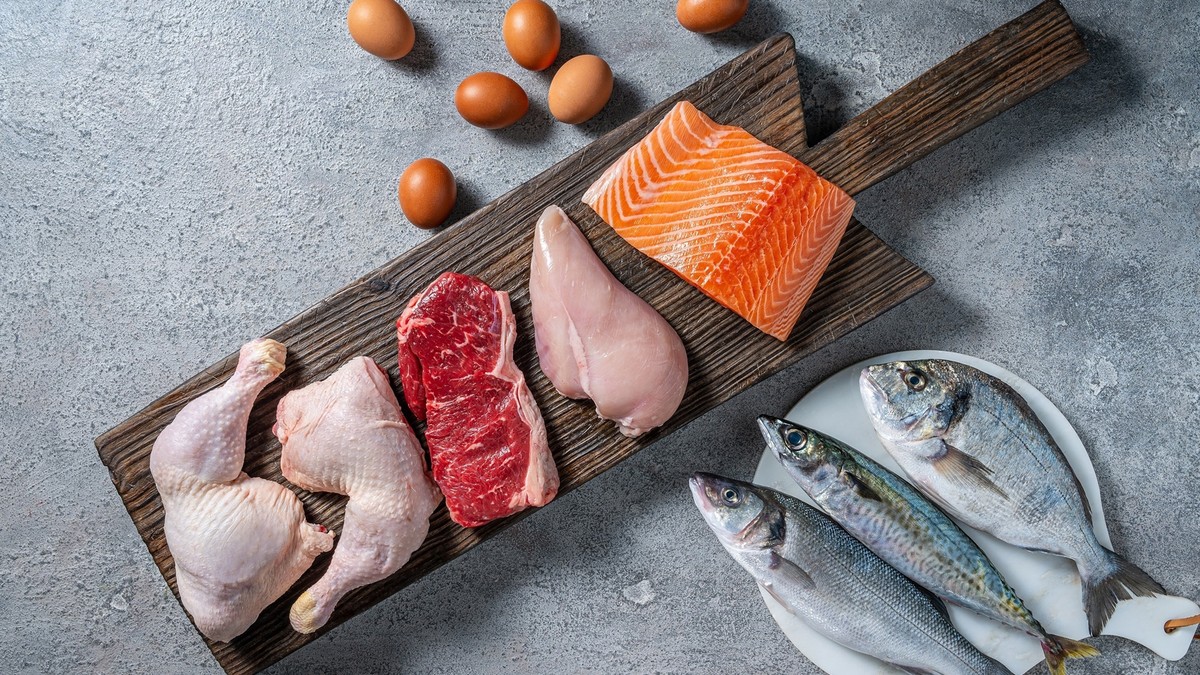
3. When in doubt, choose protein
This is my favourite tip because I love meat. Bring me to a meat buffet and I’ll be a happy kid.
That being said, there are 3 reasons why you should eat more protein.
- Increased satiety: Protein takes longer to digest hence it keeps you full for longer period of time and might keep your hands of the cookie jar.
- High thermic effect of protein: This simply means because protein is harder to digest, it uses more energy. That means you can eat more protein for less calories.
- Spares lean mass: Help you look awesome by preserving lean muscle mass especially on when someone is trying to lose weight.
In fact, an interesting study done by Jose Antonio(1) which gave participants an additional 800 calories surplus everyday for 8 weeks showed no changes in their body composition!!
Pretty amazing study which further reinforces the importance of protein. So when you’re out at a buffet or a restaurant and have no idea what to eat, choose protein
4. There’s no bad food and healthy food doesn’t exist.
Labeling a food bad or healthy makes no sense if context isn’t provided.
Eating a diet rich in carbohydrates might be essential for an endurance athlete but detrimental for a diabetic.
Does that mean that carbohydrates is bad for health?
Eating too much organic almond nuts which most people might think is healthy will make you fat.
In this context are almonds still healthy?
Without a specific context and taking the variation in individuals into consideration, a food cannot be deem healthy or bad. And putting labels on a food will create an unhealthy psychological relationship with food that can result in more long term harm than good.
So instead of putting a label on food, enjoy the food you eat and have the bulk of your food coming from nutrient rich food sources. Then if you want to enjoy an ice cream or a cupcake, go ahead and eat it.
Because even for me, I’m not sure if I can reject ice cream.
What are some other tips you’ve used that has helped you with your nutrition? Which is your favorite tip? Drop them in the comment section and don’t forget to share it with your friends that you know would benefit from these tips!
P/S: In the upcoming weeks, I’ll be opening a few coaching spots at an extremely discounted rate. To give my readers priority, I would like to know if you’re interested. If you are, write Ice Cream in the comment sections!
About Author

kedric
Kedric is a performance nutritionist certified through the CISSN.
He is also currently pursuing his post graduate studies in applied sports and performance nutrition.
A lover of lifting all things heavy, Kedric helps his clients improve their performance and take them to closer to their goals.
If you love ice cream & superheroes, you both might just be best buddies.
Related Posts
-
Encyclopedia Gymnatica: A beginner’s guide to gym talkI can recall the first time I walked into the gym, not
-
Cardio Conumdrum Part II: Why I think jogging sucksThis is a follow up to my previous post titled “
-
hoohs
Ice Cream
I am interested.